
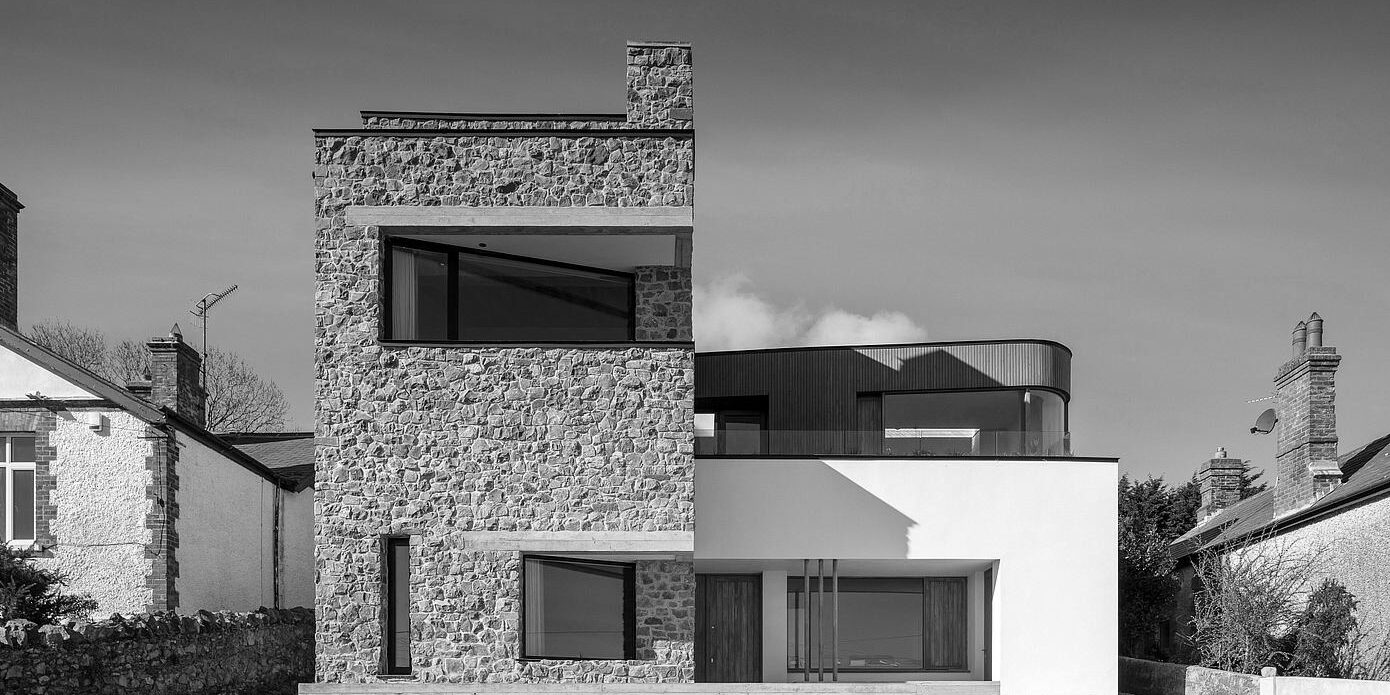
From modern coastal retreats and elegant residential extensions to reimagined heritage facades and contemporary civic designs, the breadth and vitality of Irish architecture is impressive. But what does the future hold for the Emerald Isle and the orchestrators of her built environment?
Construction momentum and innovation
Ireland’s construction sector is experiencing robust growth. Forecasts predict housing completions of around 36,000 in 2024 and climbing to 41,000 in 2025, giving Ireland the highest per-capita homebuilding rate in Europe. This momentum extends to commercial and civic projects, buoyed by government investment and favourable economic conditions.
Emerging technologies, such as modular construction, 3D-printed housing, and low-carbon materials, are being used as strategic tools against housing shortages and carbon targets. Modular methods promise 20–50% faster build times, while 3D printing could reduce material waste by up to 40%. Ireland even unveiled its first 3D-printed social housing pilot in Dundalk in late 2024.
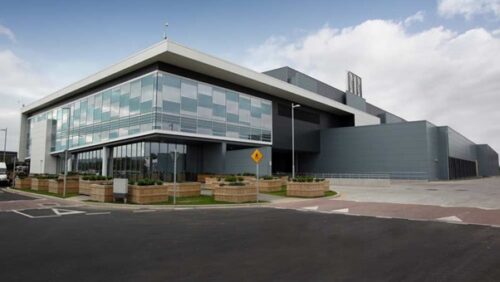
Alongside housing, commercial and civic builds, Ireland has emerged as a key hub for data centre development, driven by its strategic location, strong digital infrastructure, and role as a European base for major tech companies. This has created significant demand for architectural design expertise that balances vast operational requirements with energy efficiency and sustainability goals.
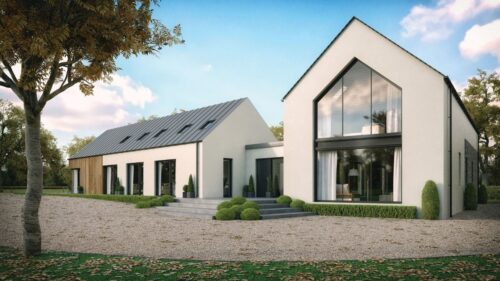
Architecture and cultural identity
Ireland’s architecture isn’t just about function; it’s about engaging with identity and public life. In 2025, Cotter & Naessens Architects spotlight ‘Assembly’ at the Venice Architecture Biennale, probing how built environments shape democratic exchange. Their installation celebrates Ireland’s Citizens’ Assembly through spatial soundscapes and interactive public programming.
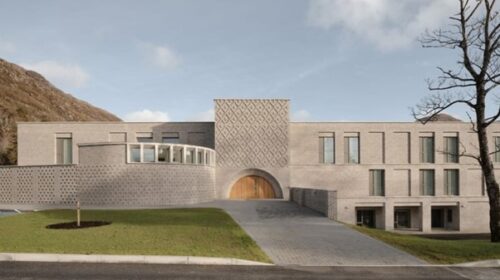
High-profile restoration efforts also give new life to Ireland’s colonial-era ‘Big Houses,’ such as Altidore Castle, reframing architectural legacies through hotel conversions and heritage reinterpretation. Whilst this year’s winner of the prestigious 2025 Royal Institute of Architects of Ireland (RIAI) Public Choice Award, the Benedictine Monastery at Kylemore Abbey by Axo Architects, is another representation and reflection of Ireland’s history and identity.
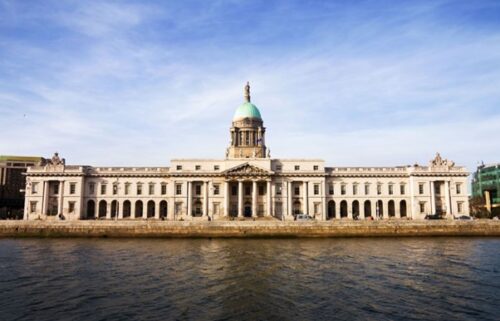
Challenges: Homogeneity, talent and policy hurdles
Despite optimism, concerns linger. Many practitioners and commentators point to a proliferation of monotonous ‘developer-designed boxes’ in housing. Whilst efficient, it’s felt they lack creativity or a uniquely Irish voice.
Another concern is that procurement policies might be sidelining emerging talent. Critics argue that regulations, even though well-intentioned, are constraining younger architects and preventing a broader spread of innovation across the built environment.
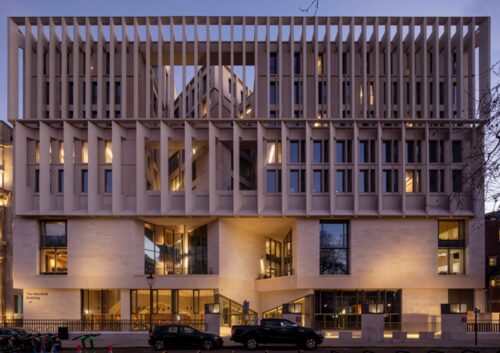
What lies ahead: Infrastructure and public design
Public infrastructure projects are also reshaping Ireland’s architectural landscape. The €70 million redevelopment of Galway’s Ceannt Station, which includes expanded platforms and a reinstated glass-and-iron façade, speaks to a future where transit hubs double as civic landmarks. Though the beloved Pálás Cinema in Galway sadly closed in early 2025, its fate highlights both the challenges and opportunity in retaining culturally meaningful buildings in urban life.
An emerald-green future
Ryan Doble, Team Leader for Blackedge’s Ireland market, is of the opinion that Irish architecture is firmly in a good place, especially in terms of growth, innovation and sustainability.
“The sector is pushing forward with both volume and verve, experimenting with new technologies, grappling with climate imperatives, and engaging culturally and democratically,” he explains. That said, he believes that the path ahead demands attention to design diversity, talent access, and policy reform.
Ryan states: “If Ireland can nurture creativity against the backdrop of efficiency and regulation, it not only builds well, it also builds identity. The blueprints for success are in place, Ireland just needs to bring them to life.”
Sustainability and climate-aware design
Architecture schools across Ireland are undergoing a major curricular overhaul to embed sustainability and the RIAI’s 2030 Climate Challenge into all training; a pioneer initiative unmatched elsewhere. Additionally, greener design is becoming more mainstream, from energy-efficient building layout strategies and rainwater harvesting to green roofs and Passive House standards, championed by firms and the Green Building Council of Ireland.
Projects like the Arklow wastewater treatment plant exemplify how public infrastructure can blend beauty with function and sustainability. Its pagoda-like design, solar features, and bat-friendly elements reflect this design ethos.
Want to know more?
Blackedge works closely with prestigious firms across Ireland, connecting clients with our international talent network. Reach out to Ryan today to find out more about our staffing solutions and the opportunities we have available.